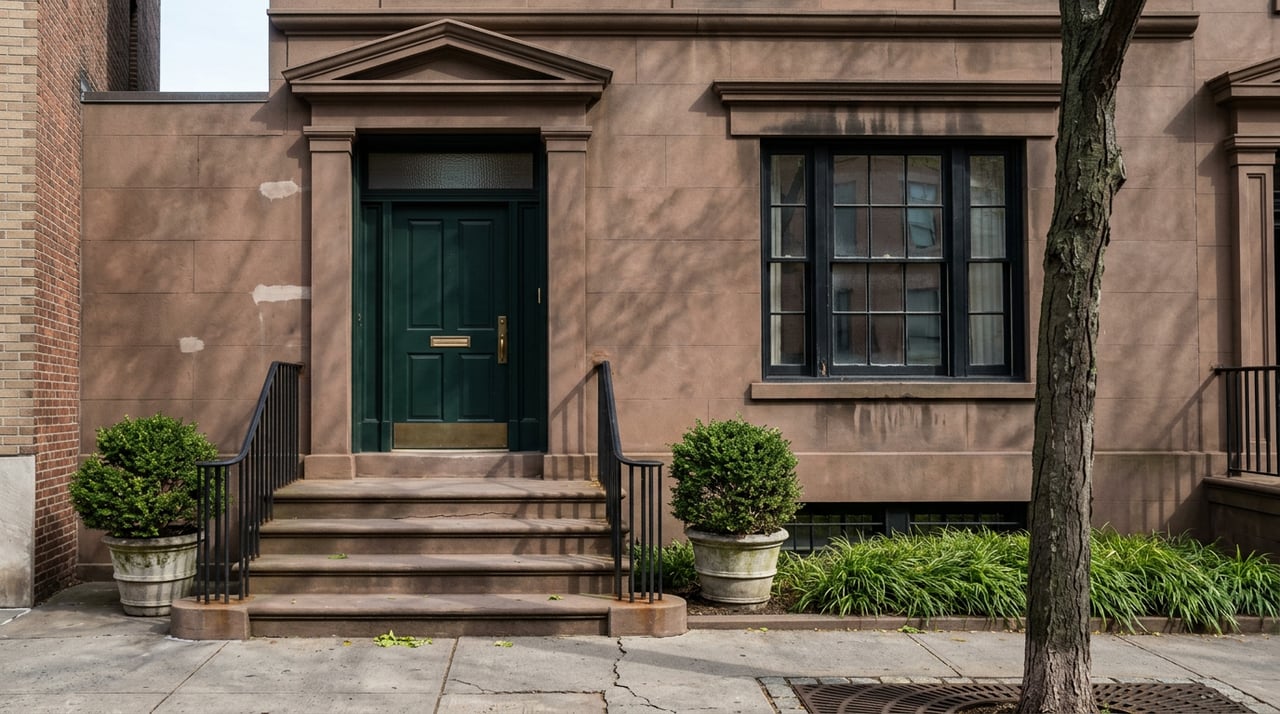
Composer Cole Porter kept a carriage house at 2 Sniffen Court and, for a time, the one next door at 4 Sniffen Court as well. Both buildings sit inside one of New York City's smallest historic districts, a private mews of ten former stables tucked off East 36th Street between Third and Lexington Avenues. Walk two blocks north and you are standing in a different historic district altogether, one designated by the Landmarks Preservation Commission decades later and governed by an entirely separate set of rules. Walk one more block in another direction and you may be standing in front of a brownstone that looks exactly like both of those but carries no landmark protection at all.
This is the part of Murray Hill that gets flattened in most real estate conversations. Owners, buyers, and even some agents talk about "landmarked Murray Hill" as though it were a single, uniform status draped over the entire neighborhood. It is not. It is at least three distinct legal categories stacked into a few dozen blocks, and knowing which one applies to a specific address changes what a seller can promise, what a buyer's architect needs to budget for, and how long a renovation approval might take before a closing can happen on schedule.
Three Very Different Kinds of "Landmarked"
The Murray Hill Historic District. Designated by the LPC in 2002, this is the core district most people mean when they say a Murray Hill townhouse is landmarked. A 2019 CBS New York feature on a Second Empire townhouse at 115 East 38th Street noted that the district contained just 71 homes at the time, a footprint far smaller than the neighborhood's full stretch of brownstone-lined blocks.
The 2004 extension. Two years after the original designation, the LPC added a second boundary covering 12 additional buildings constructed between 1863 and 1955, according to the Library of Congress record of the designation report. These buildings carry the same protections as the original district, but they were reviewed and approved on a different timeline and under a separate report, which matters if a title search or past renovation permit references one designation date and not the other.
Sniffen Court. Designated in 1966, decades before the broader district existed, Sniffen Court is its own historic district built around ten two-story brick stables from 1863 and 1864. Two of those buildings have housed the Amateur Comedy Club, an organization that has occupied the space since 1884, according to Brick Underground's reporting on the mews. Sculptor Malvina Hoffman kept a studio on the same street for more than four decades, and Cole Porter was among the first names of note to move in. None of this history overlaps with the paperwork governing the Murray Hill Historic District two blocks away. It is a separate designation with its own file at the LPC.
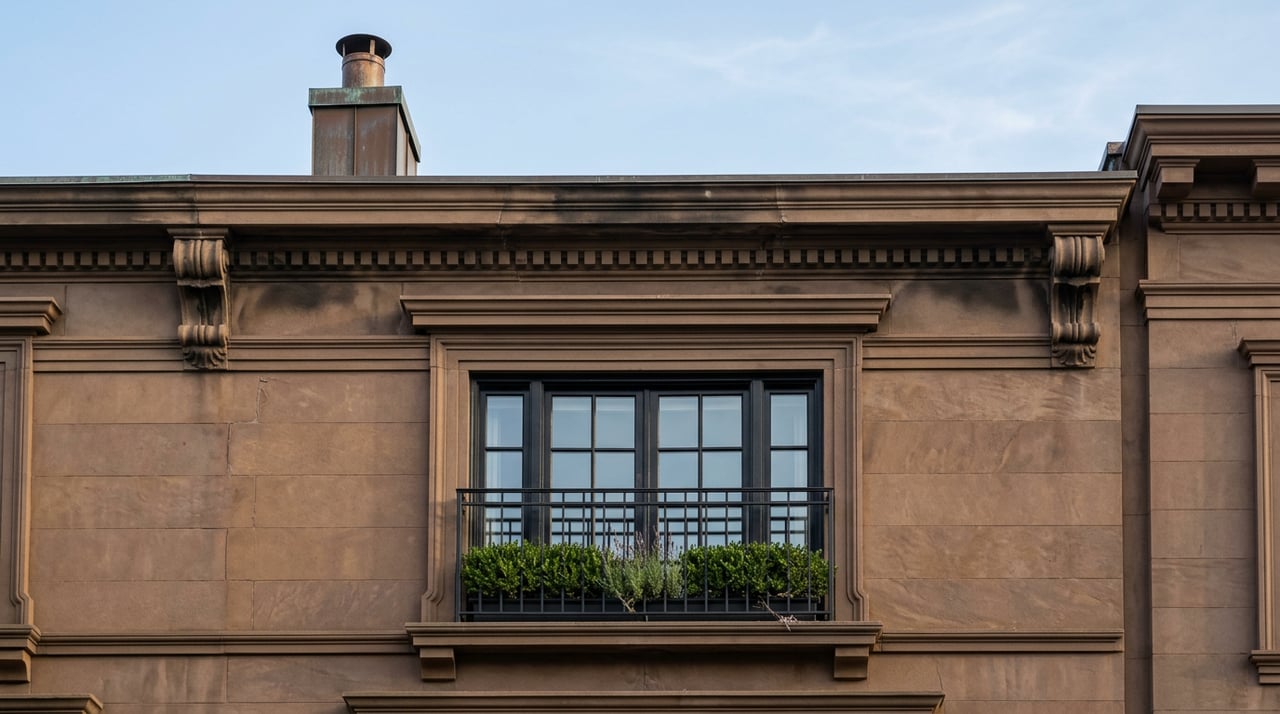
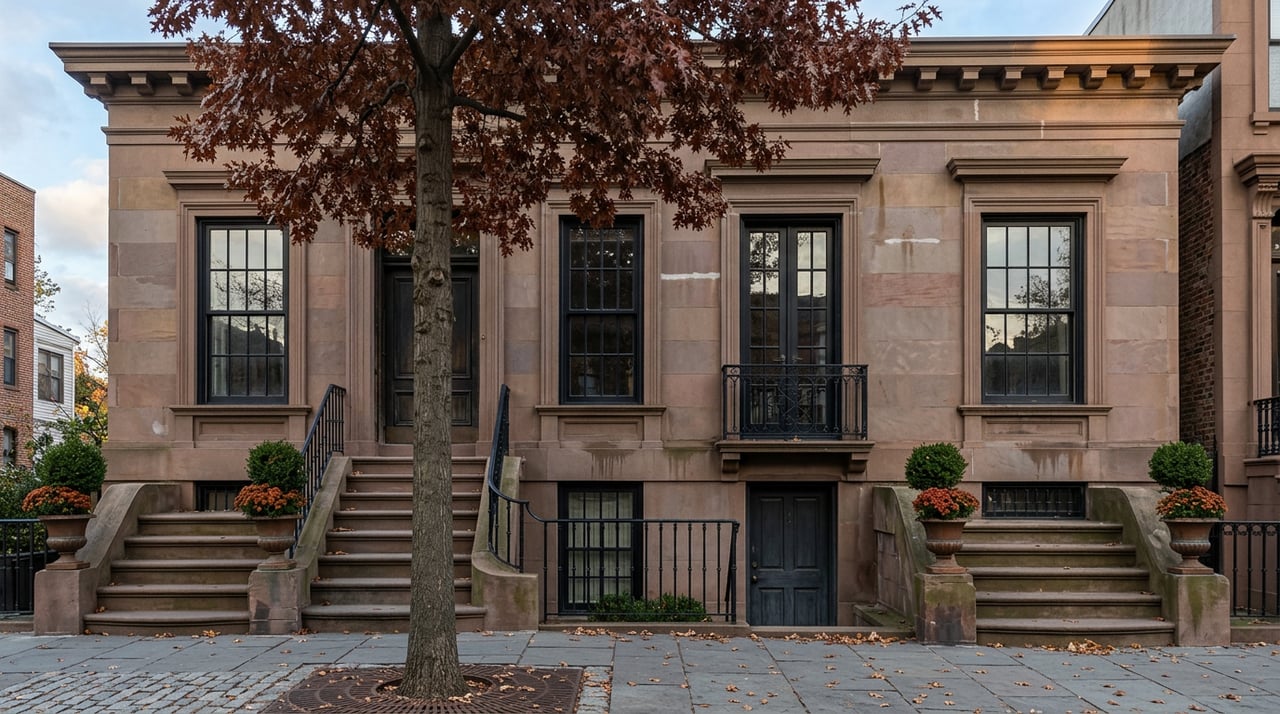
Everything else. The largest category by far is the brownstone stock that sits outside all three boundaries. These buildings share the same Italianate and Second Empire detailing as their landmarked neighbors, sometimes on the very same block, but they answer to no design review board when an owner wants to change a cornice, swap out windows, or add a rear extension.
What Landmark Status Actually Requires
The Murray Hill Neighborhood Association's own preservation committee puts the obligation plainly: the LPC must approve any alterations or new construction on landmarked buildings, and all of them must be kept in good repair. That single sentence is the entire difference between the categories above. A building inside one of the three designated districts needs sign-off before an owner touches a visible exterior feature. A building outside them does not.
To even qualify for that protection in the first place, a structure generally has to be at least thirty years old and carry special historical, architectural, or cultural merit as the LPC defines it. Citywide, that standard has produced more than 38,000 protected buildings, spread across 1,464 individual landmarks and 158 historic districts. Murray Hill's own share of that total is modest. The neighborhood association has been tracking what it calls Murray Hill's 14 landmarks as part of programming tied to the LPC's 60th anniversary, a reminder that even within a neighborhood known for its rowhouses, formally protected buildings are the exception rather than the rule.
"The LPC must approve any alterations or new construction on landmarked buildings, and all must be kept in good repair."
For owners inside a designated district, the LPC's own Rowhouse Manual walks through how to plan and document exterior work in a way the Commission is likely to approve on the first pass. The agency's permits page is the starting point for figuring out which review track a given project falls into. Neither resource is useful, though, until you know which of the four categories above actually applies to your address.
| Category | Designated | Approximate Scope | What It Means for a Seller |
|---|---|---|---|
| Murray Hill Historic District (core) | 2002 | 71 buildings | Any exterior change needs LPC review before permitting |
| 2004 Extension | 2004 | 12 buildings, built 1863 to 1955 | Same protections as the core district, separate designation report |
| Sniffen Court Historic District | 1966 | 10 carriage houses | Its own file at LPC, unrelated to the broader district's rules |
| Unlandmarked rowhouse stock | Never designated | The majority of the neighborhood's brownstones | No LPC review required for exterior work |
Why the Distinction Bites Harder in Today's Market
Murray Hill's house market has been moving in a direction that makes this kind of surprise more expensive to absorb. The median house sale price in the neighborhood reached $1.2 million in May 2026, up 26.7 percent year over year, a pace that outstrips the broader condo and co-op segments in the same data set. That kind of appreciation tends to compress the room buyers and sellers have for mid-contract delays.
Inventory is thin enough that a delay matters more than it would in a deeper market. A recent snapshot of active listings showed only seven townhouses for sale in Murray Hill, carrying a median asking price of $3 million and averaging 114 days on the market before going into contract. When the pool is that small, a buyer who discovers late in diligence that a planned renovation requires a Certificate of Appropriateness they had not budgeted time for is far more likely to walk, or to renegotiate the price down to cover the delay.
The market has already started to price this in on its own. At least one current Murray Hill listing describes its building as sitting on a landmarked, tree-lined block, using the designation itself as a selling point rather than a footnote. That is a reasonable strategy for a preservation-minded buyer who values the permanence and streetscape control that landmark status guarantees. It is the wrong pitch entirely for a buyer who wants to gut a townhouse and add a rear addition without a design review process standing between them and their contractor. Knowing which buyer you are marketing to, and which category your specific address falls into, determines which story the listing should tell.
How to Confirm Which Category Your Address Falls Into
- Pull the LPC's public designation maps and reports for the specific address rather than relying on the neighborhood's general reputation for landmark status.
- If the building sits on the East 36th Street mews itself, assume Sniffen Court's 1966 designation applies, not the broader Murray Hill Historic District rules.
- Cross-reference the 2004 extension separately from the original 2002 boundary, since the two carry different designation dates and different designation reports even though they share the same protections today.
- Before listing a property where facade or rooftop work is planned, request a written determination from the LPC rather than assuming based on the block's appearance or a neighbor's past renovation.
Frequently Asked Questions
Does landmark status raise or lower resale value in Murray Hill? It depends on the buyer. Preservation-minded buyers often pay a premium for the certainty that a block's character cannot be altered around them. Buyers planning significant exterior renovation may prefer unlandmarked stock precisely because it avoids the review process altogether. Neither preference is universal, which is why identifying a property's actual category matters before setting a marketing strategy.
Can interior renovations proceed without LPC review if my building is landmarked? Interior work that does not affect the street-visible envelope generally falls outside the Commission's design review, though any project requiring a Department of Buildings filing tied to the exterior can still trigger a review step. This is a planning question best confirmed with the LPC directly for a specific scope of work rather than assumed from general rules.
What if my building is in the 2004 extension but not the original 2002 district? The protections are functionally the same. The distinction matters mostly for paperwork and title history, since the extension has its own designation report and effective date separate from the original boundary.
Murray Hill rewards owners and buyers who do their homework on questions like this before they show up in a contract negotiation. If you are weighing a sale, a purchase, or a renovation on a Murray Hill townhouse and want a clear read on which landmark rules actually apply to your address, Your Townhouse Guy can walk through the designation history with you and build a plan around what your specific building can and cannot do.